
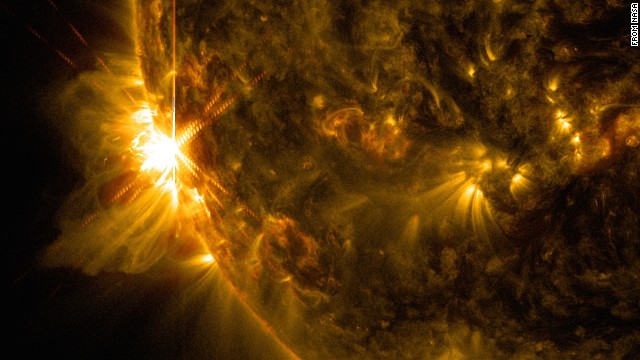
 NASA's Solar Dynamics Observatory,
which observes the sun 24 hours a day, captures this image of an
X-class solar flare at 7:42 a.m. ET Tuesday, June 10. X-class flares are
the most powerful. Check out more images of recent solar flares and
related activity:
NASA's Solar Dynamics Observatory,
which observes the sun 24 hours a day, captures this image of an
X-class solar flare at 7:42 a.m. ET Tuesday, June 10. X-class flares are
the most powerful. Check out more images of recent solar flares and
related activity:
The short-lived
explosions were expected to disrupt high-frequency radio communications
on Earth, although NASA scientists said they pose no threat to humans.
Even with all its power, the sun doesn't have enough energy to hurl a fireball 93 million miles at the Earth.
Solar flares are powerful
bursts of radiation that send gases, plasma and other matter into the
solar system. Harmful radiation from a flare cannot pass through Earth's
atmosphere to affect humans, but when intense enough, the explosions
can disturb GPS and communications signals, NASA said.

Written by Unknown
We are Creative Blogger Theme Wavers which provides user friendly, effective and easy to use themes. Each support has free and providing HD support screen casting.
